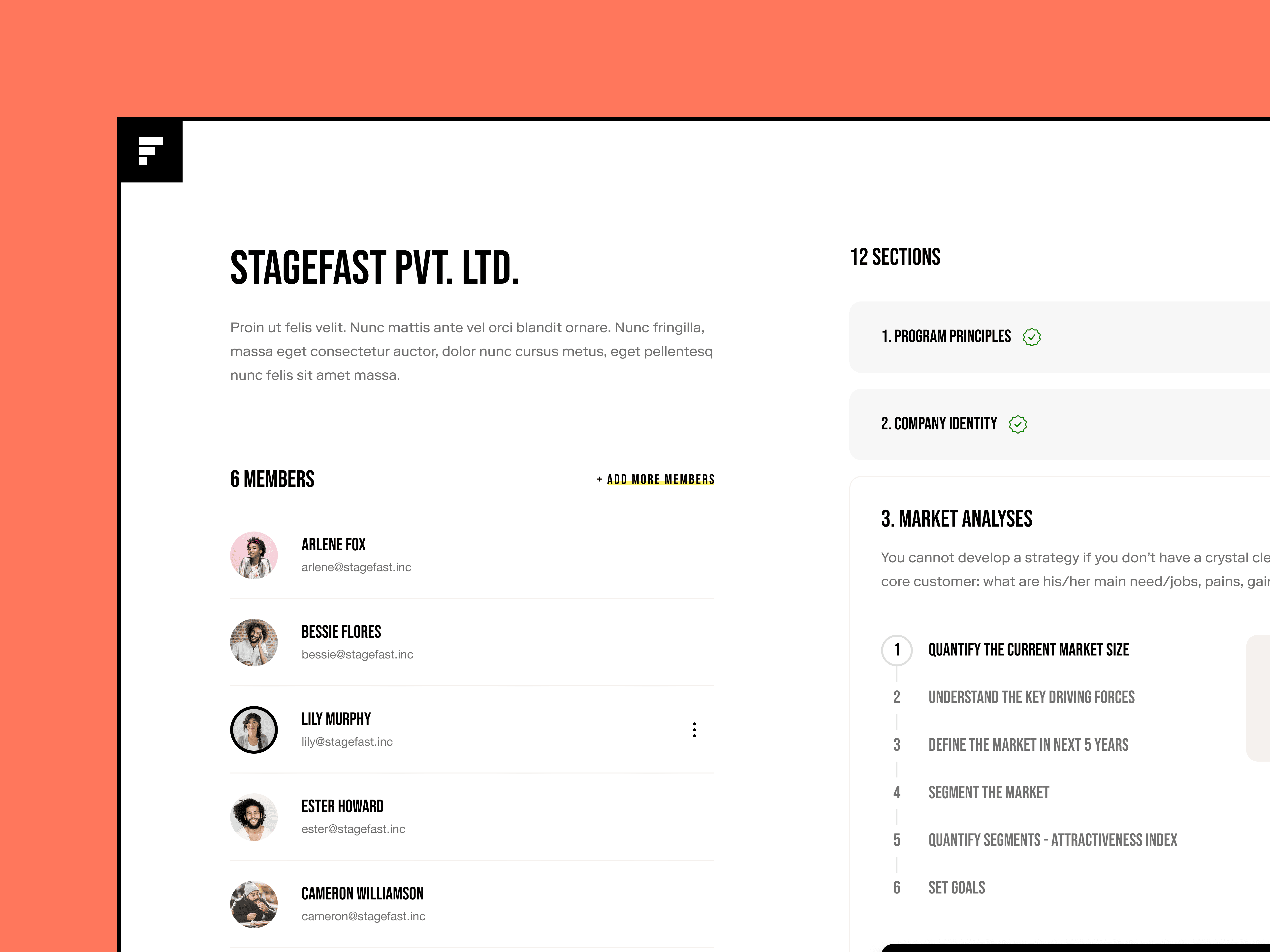
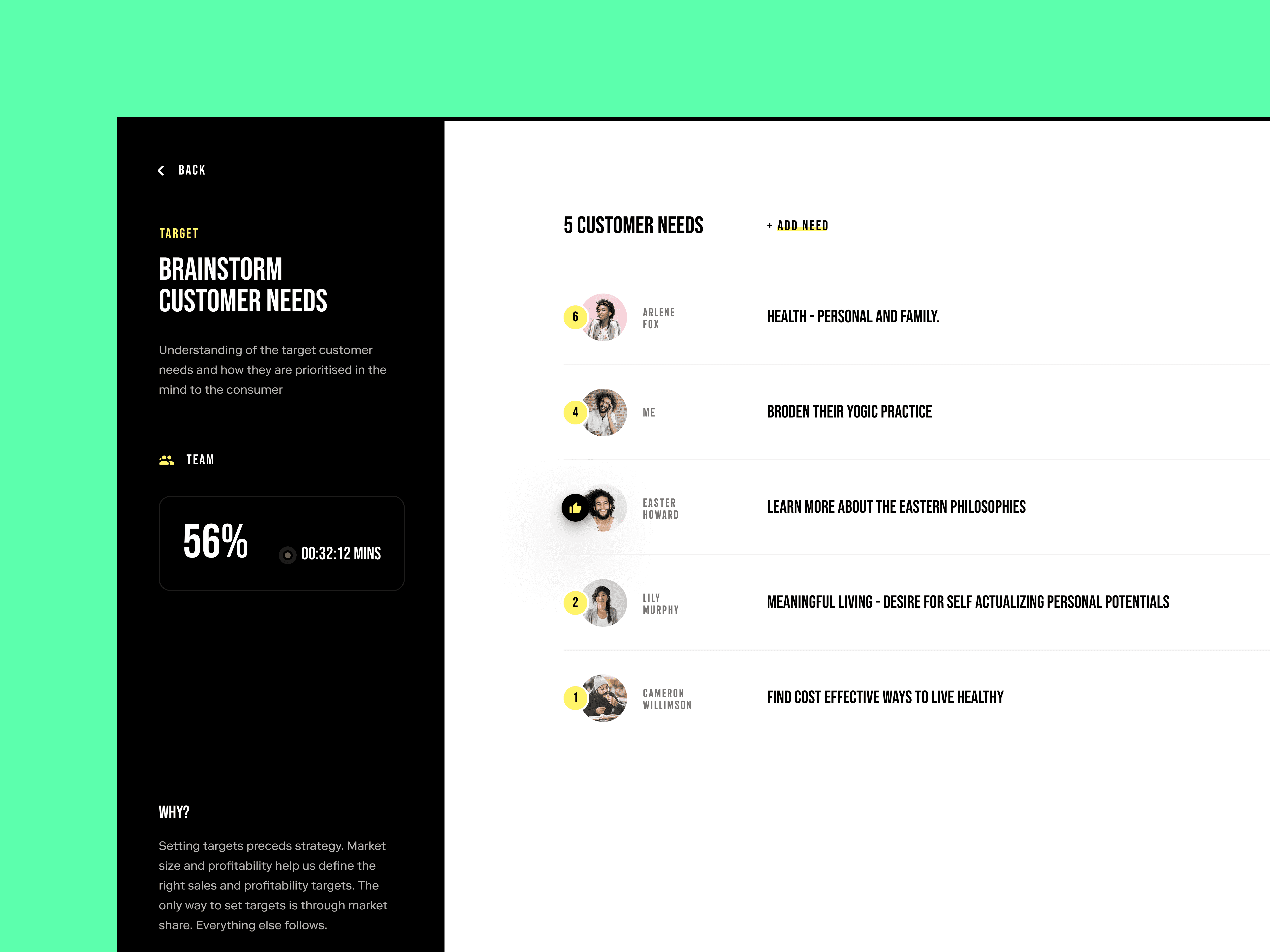
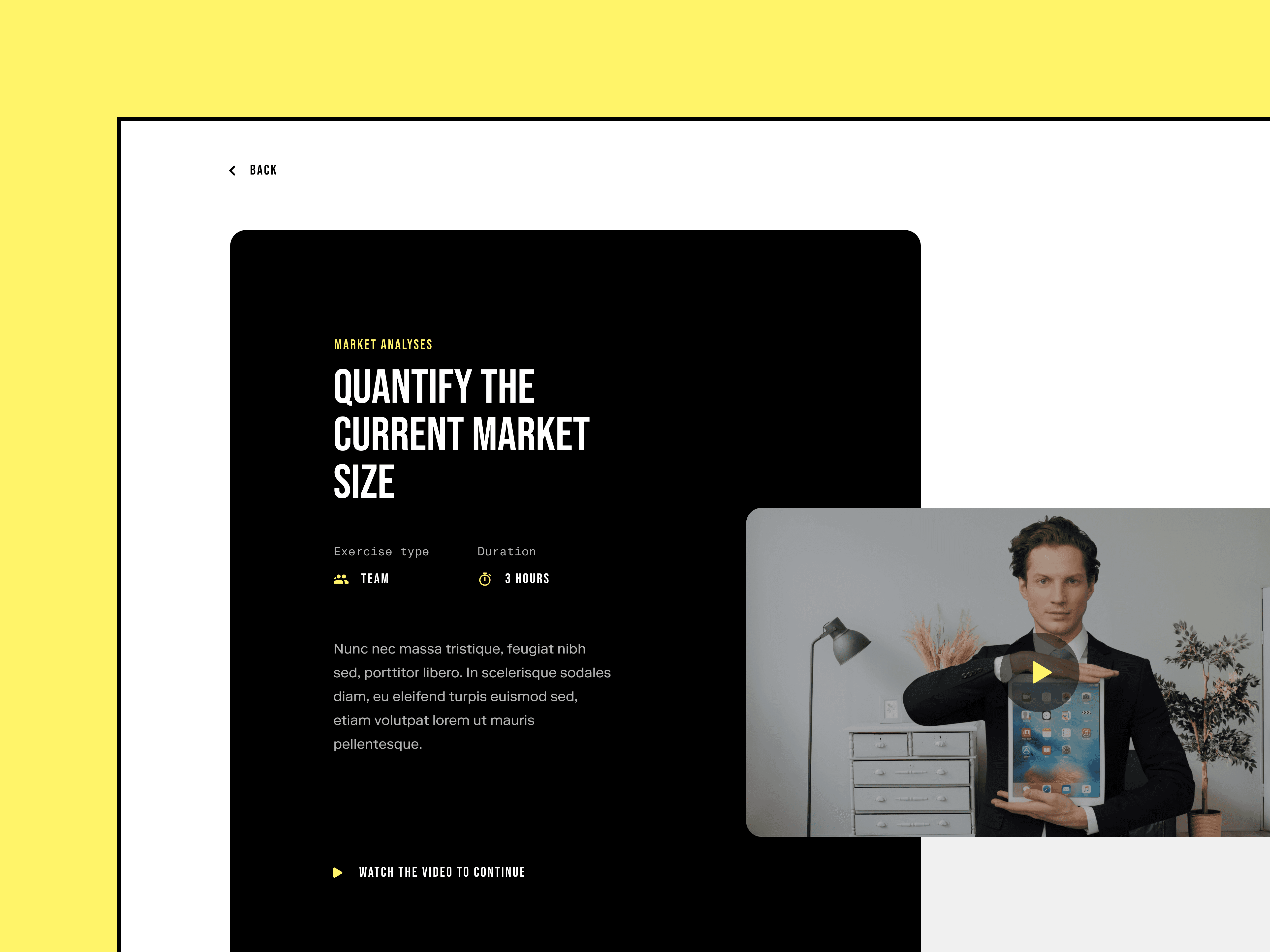
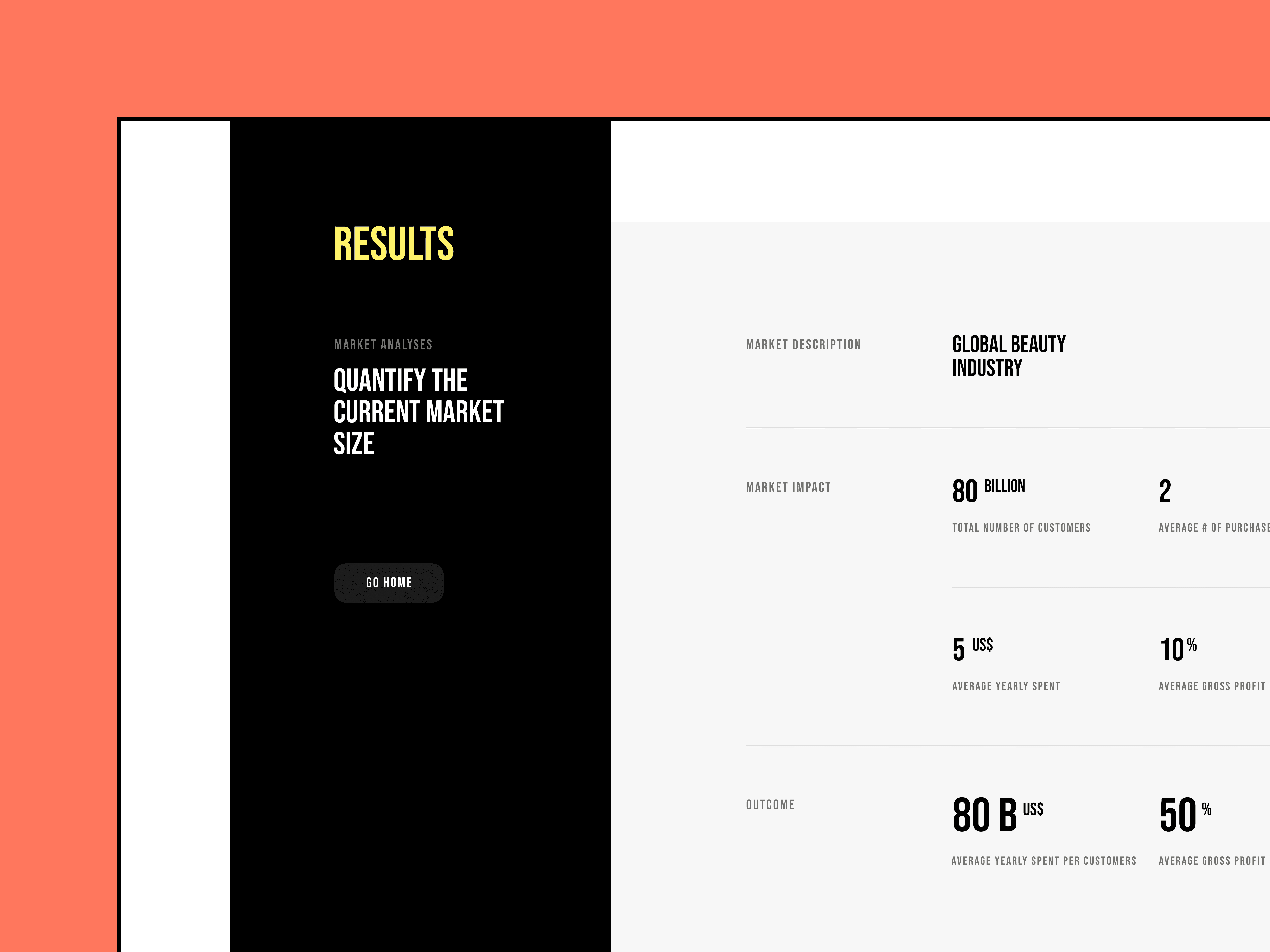

Digitising strategic planning without losing depth, rigour, or facilitation clarity.
FastTrack works with companies to help them prepare for business success through structured strategic exercises involving leadership and senior management.
Existing model relied on:
PowerPoint Slide Decks.
Facilitated workshops.
Static documents
Process also depended on:
Offline coordination.
Post-session documentation effort.
The opportunity was to replace this with a digital platform that could:
Guide teams step by step.
Preserve structured thinking.
Enable collaboration.
Scale beyond physical workshops.
Outcomes
Workshops ran digitally without slide decks.
Facilitators relied less on manual consolidation.
Teams progressed through exercises with visible structure.
Strategic conversations became documented as they happened.
Team
Raghu Potani
Ming Tao
Industry
SaaS ✦ B2B
My Role
Solo Designer
Product Design
Design Direction
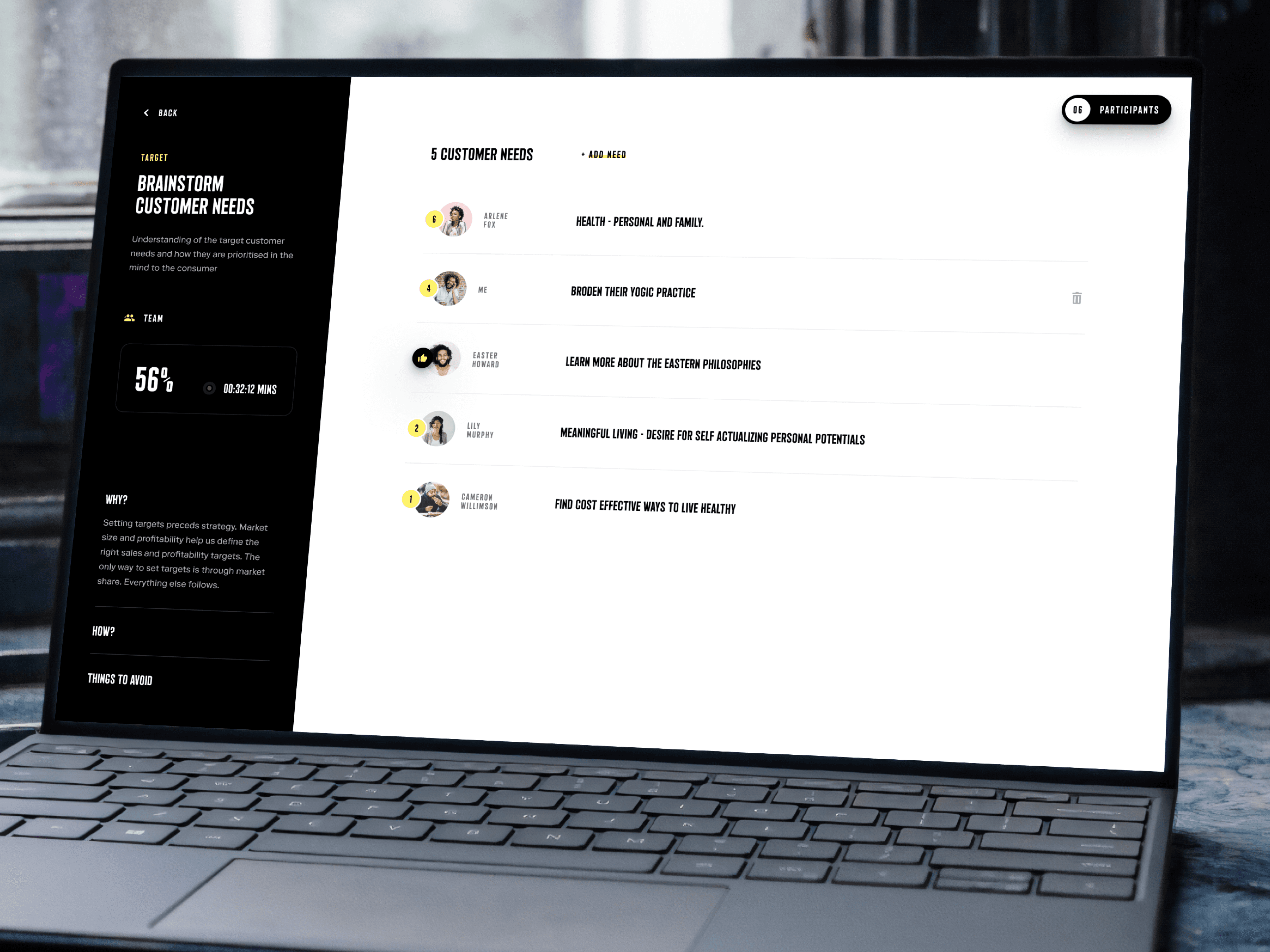
The initial assumption
The first instinct was to digitise the slide deck.
Convert:
Exercises into forms.
Slides into screens.
Workshop flows into linear navigation.
The challenge wasn’t “build a digital version of FastTrack.”
The challenge was:
How do we design a system that is self-guided, structures strategic thinking without a need for a human mediator?
How do go from:
Slide-driven delivery
To:
System-driven participation
The experience needed to:
Guide thinking, not just display content.
Structure contribution, not just collect answers.
Help teams move from brainstorming to clarity.
Prevent cognitive drifts.
The digital space had to become the facilitator.
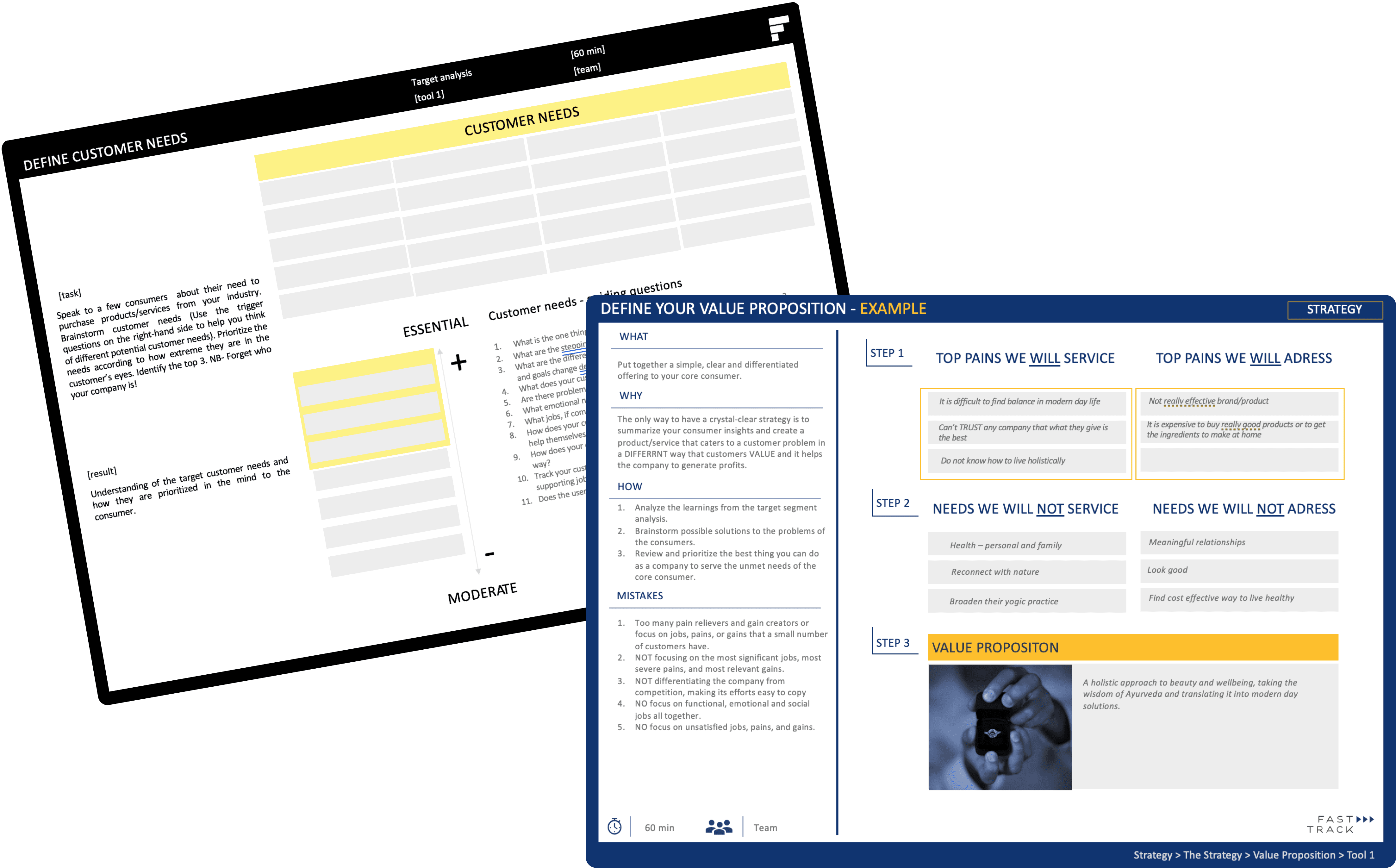
👆 Static screens of modules (exercise) that were used to be filled out manually at the site.
First-principles approach
I reduced the product to core structural requirements:
Strategic thinking happens in stages.
Each stage has a clear cognitive objective.
Collaboration needs visibility and progression.
Ambiguity must be narrowed deliberately.
From this, the structure emerged:
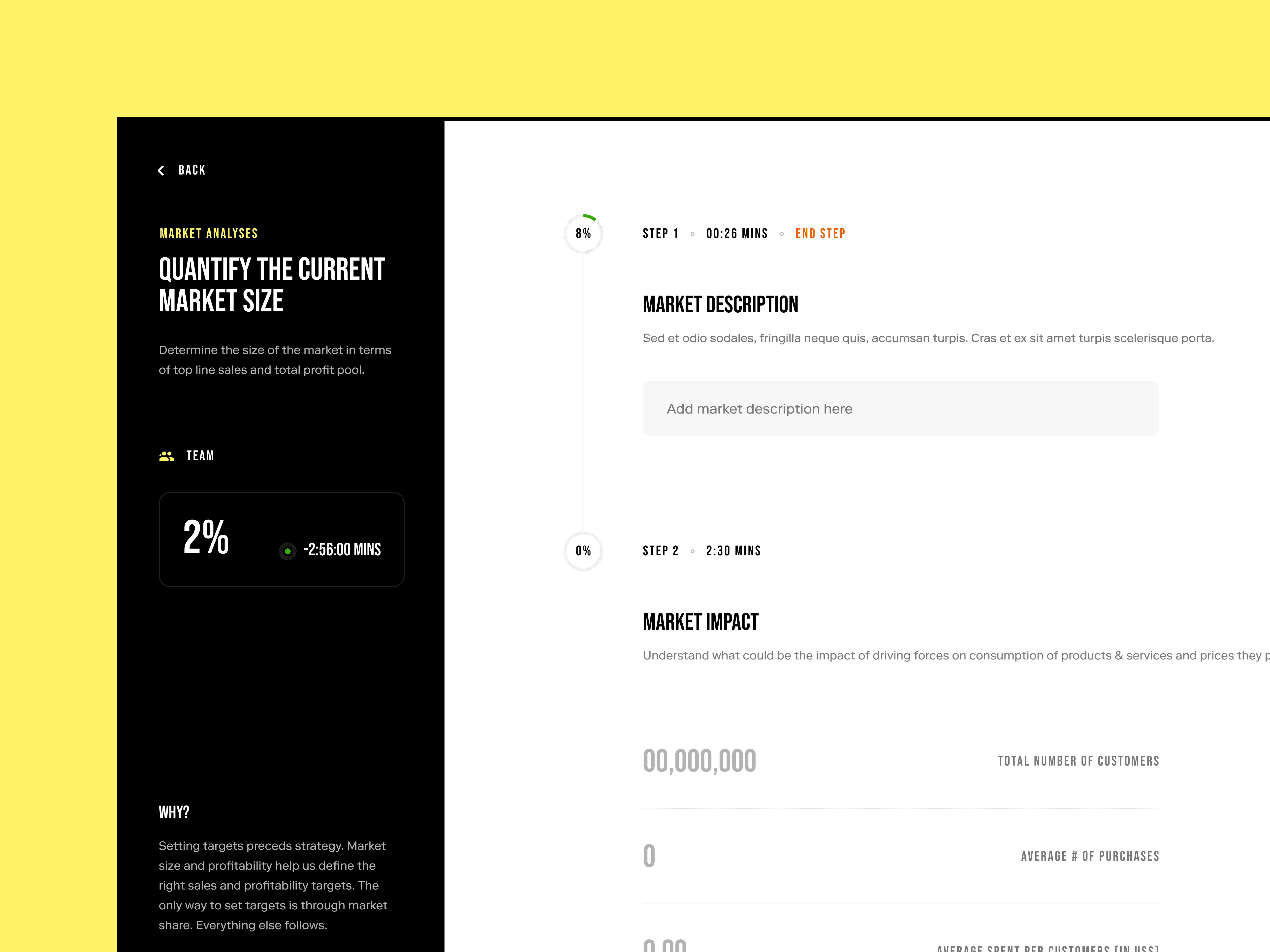
Step-based guided exercises.
Clear progress indicators.
Structured customer need articulation.
Defined target-setting phases.
Feedback and critique loops.
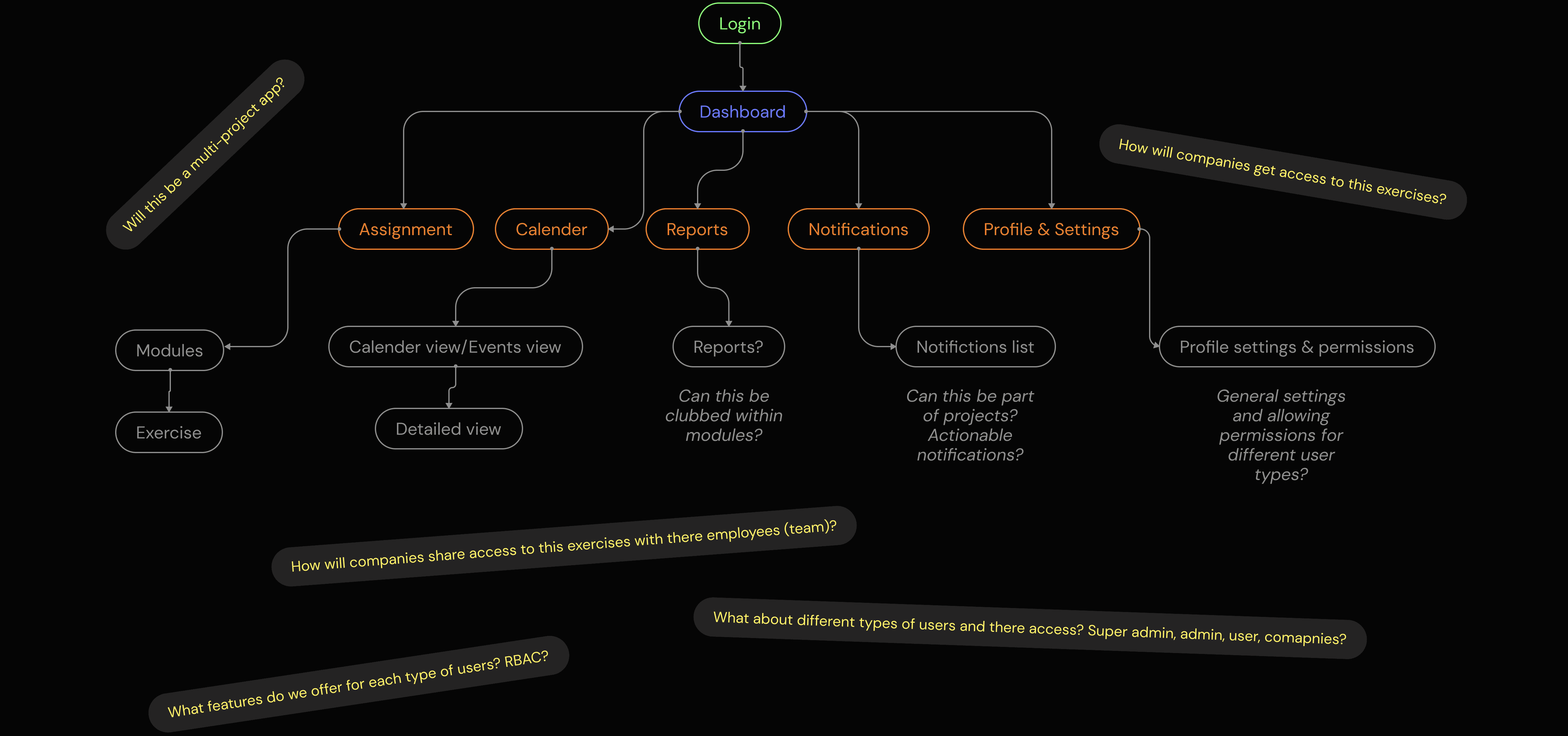
👆 Product architect. Where lot of the initial thinking happened.
Product Direction
We designed around the idea of:
Guided Progression
We built a step-based system.
You move forward deliberately.
Progress is visible.
Completion is measurable.
This reduces branching complexity and keeps teams aligned.
Structured Collaboration
Participants can easily:
Contribute ideas.
See peer contributions.
Prioritise collectively.
Enforcing structure on the interface to avoid confusion without compromising the flexibility.
The system replaces facilitation
In physical workshops, facilitators:
Redirect conversations.
Manage time.
Clarify objective.
Preventing any visual noise during thinking phase.
Digitally, the interface was in-charge of performing that function.
So the designs enforced:
Phase boundaries.
Objective clarity.
Completion logic.
The UI functioned as a moderator.
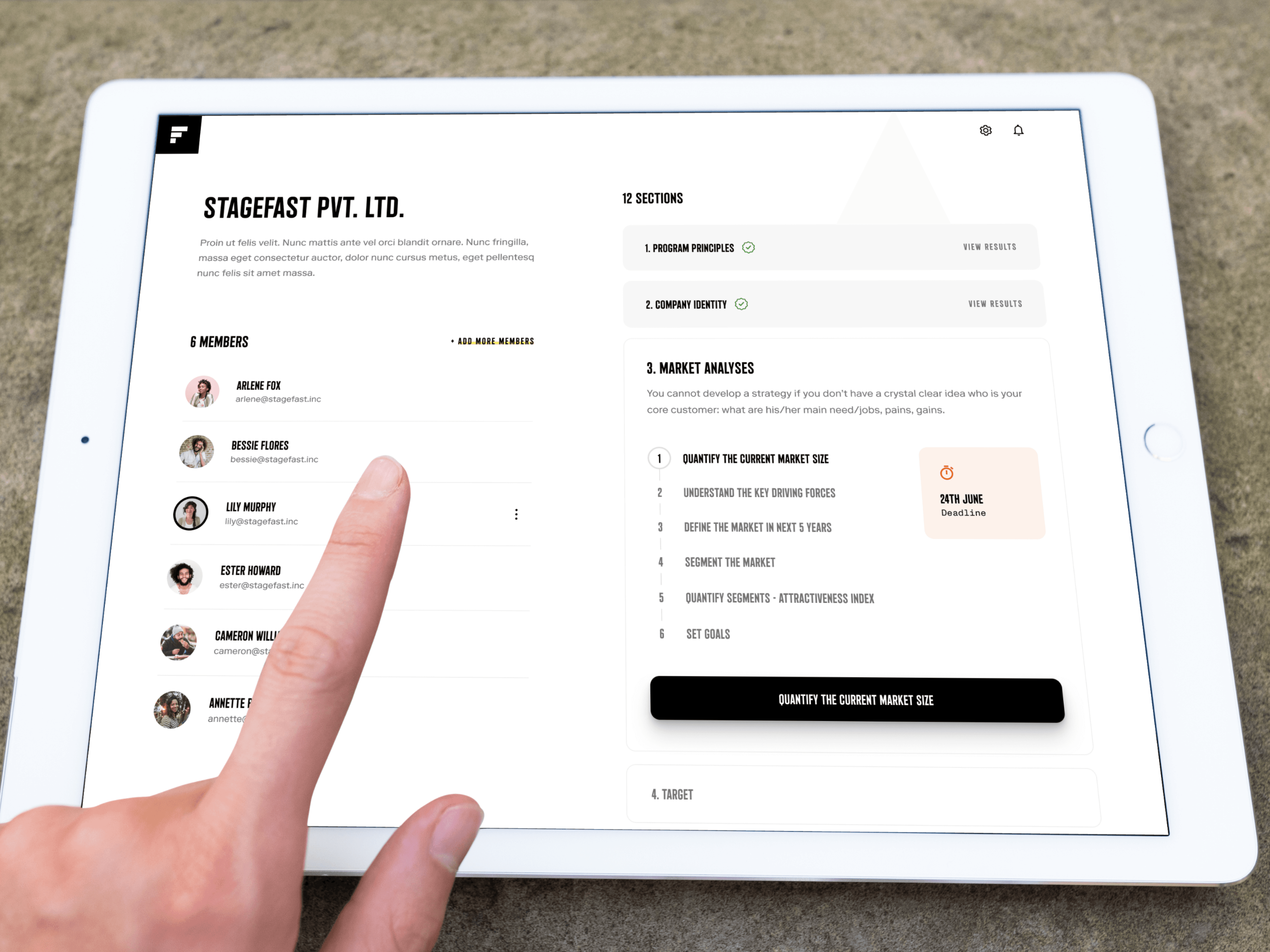
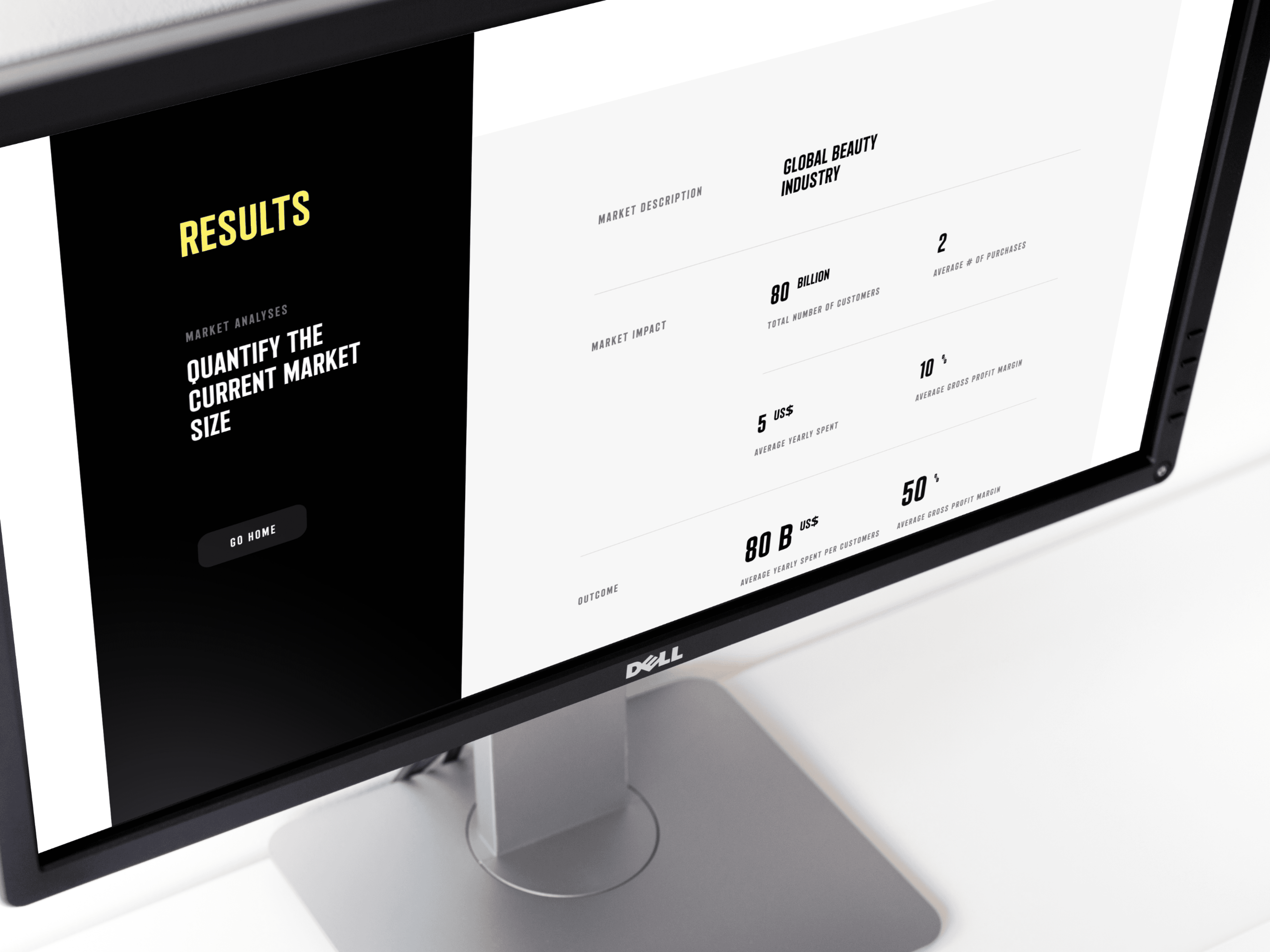
Visual clarity under cognitive load
Strategic thinking is mentally heavy.
The UI intentionally:
Reduce ornamentation.
Emphasises hierarchy.
Uses high-contrast layout.
Separates instructions from input.
Preventing any visual noise while thinking.
Design constraints that shaped the system
We were replacing an established consulting workflow.
Which meant:
The experience had to feel credible.
It required to support leadership=level usage.
Overall tone & structure was critical and it had to feel light weight.
Component constraint
The tasks spanned across multiple phases:
Reusable components help:
Reduces re-learning.
Reinforces rhythm.
Maintains structural clarity.
It serves as cognitive scaffolding.
Key design decisions and trade-offs
Linear progression over flexibility
Trade-off:
Less exploratory freedom.
Gain:
Reduced cognitive fragmentation and clearer alignment.
Dark, high-contrast interface
Trade-off:
Less warmth.
Gain:
Reduced distraction and stronger focus during exercises.
What we deliberately did not build
The obvious approach would've been to copy the slide deck experience and put it online.
It would have been the easiest path — familiar structure, predictable flow, low resistance.
The goal was to help team move towards decisions.
So intentionally the flow was kept structured and focused.
Reflection
The harder part was resisting familiarity of existing manual process.
And much harder was to build an experience which could help digitise structured thought.